Rotax 912 vs 915 vs 916: the complete buyer's guide for UL & LSA pilots
Rotax owns the under-625 kg world. Within their lineup, three engine families cover 95% of new airframe orders: 912, 915iS, 916iS. They look similar from the outside; they cost dramatically different to buy and operate. Here's how to choose.
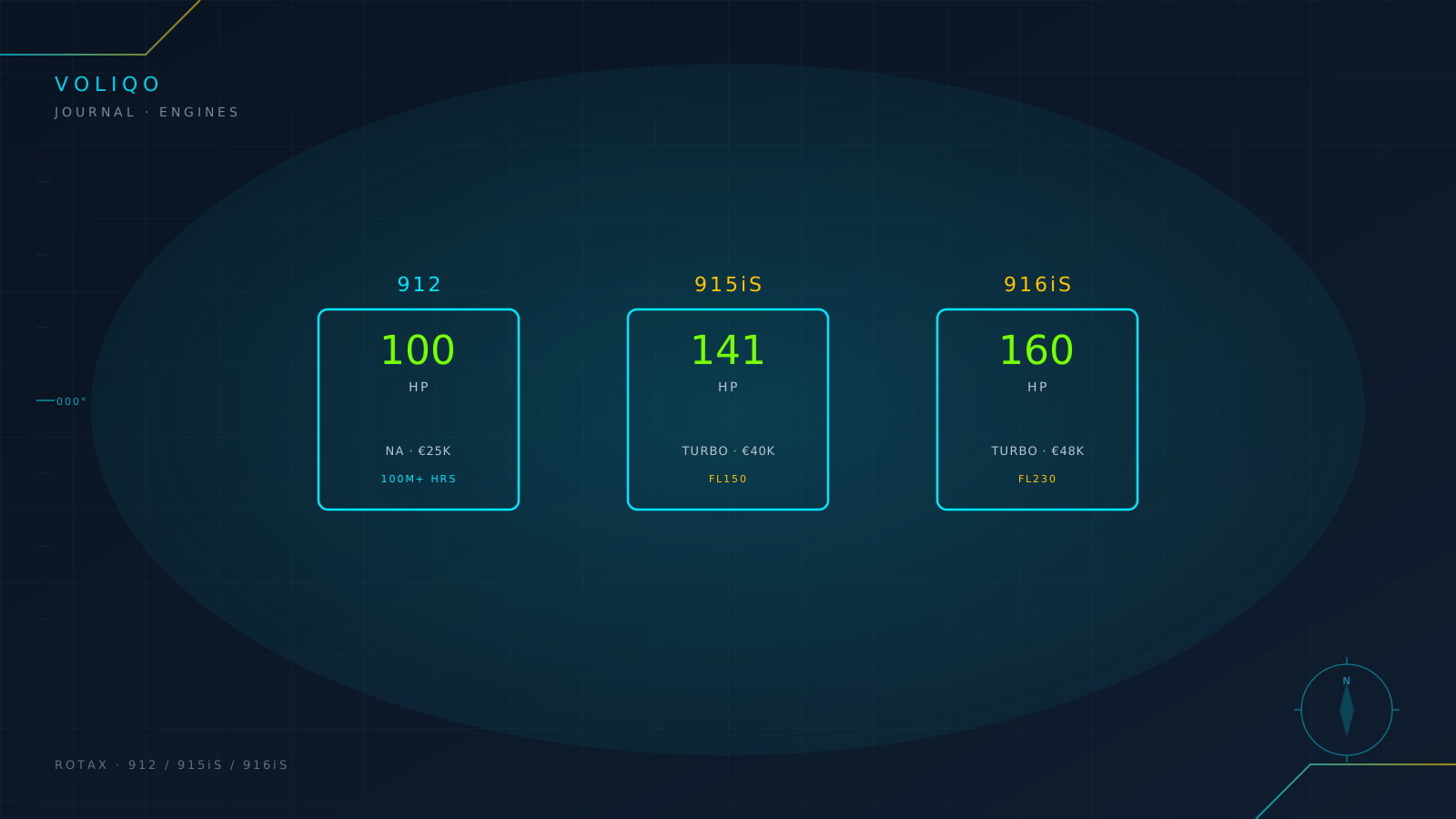
If you're shopping in the UL or LSA bracket in 2026, the engine question is almost always a Rotax question. Lycoming and Continental dominate the heavier CS-23 fleet; Rotax owns the under-625 kg world. Within Rotax's lineup, three engine families cover 95% of new airframe orders: the venerable 912, the turbocharged 915iS, and the high-altitude 916iS. They look similar from the outside. They cost dramatically different amounts to buy and operate, and they unlock dramatically different mission profiles. Here's how to choose.
The lineup, with no marketing dust
| | 912 ULS / 912 iSc3 | 915 iS | 916 iS | |---|---|---|---| | Power | 100 hp | 141 hp | 160 hp | | Aspiration | Naturally aspirated | Turbocharged | Turbocharged | | Fuel | Mogas / Avgas | Mogas / Avgas | Mogas / Avgas | | Service ceiling (engine) | ~14,000 ft | ~15,000 ft (full power) | ~23,000 ft (full power) | | Cruise burn typical | 14–17 l/h | 22–28 l/h | 26–35 l/h | | Weight (dry, no acc.) | ~57 kg | ~76 kg | ~80 kg | | TBO | 2,000 h | 2,000 h | 2,000 h | | New price (approximate, 2026) | €25,000 | €40,000 | €48,000 | | Overhaul cost (typical) | €18,000 | €24,000 | €27,000 | | Fleet hours worldwide | >100 million | ~5 million | ~1 million | | Mature parts ecosystem | ✅ extensive | ✅ established | 🟡 developing |
The 912 has been in production since 1989 with continuous refinement. The 915iS came online in 2017 and has matured into the workhorse turbo for serious cross-country UL/LSA missions. The 916iS launched in 2022 — the headline maker for high-altitude capability.
What the 912 does (and where it stops)
The 912 is the safe answer for most pilots most of the time:
- 100 hp is plenty for a 600 kg airframe
- Sea-level performance is what you need for local + regional flying
- Reliability dataset is the largest in light aviation — millions of cycles, well-understood failure modes
- Mogas operation keeps fuel costs predictable
- Maintenance ecosystem is mature; almost any A&P or LAME can work on it
It stops being the right answer when:
- You regularly fly above 6,000 ft DA (density altitude) — the NA engine loses meaningful power
- You cross terrain (Alps, Pyrenees, Atlas) where you want to climb above MEA quickly
- You operate from high-elevation airfields where take-off performance degrades
- You want maximum endurance for cross-country ops
For example: the Tecnam P92 Echo MkII on a 912 ULS does 213 km/h cruise at sea level, range 1296 km. Add altitude (turbo) and you'd be at 250 km/h and 1500 km on the same airframe. The math: if you fly 200 hours/year at sea level, the 912 saves you €15,000 over 5 years vs the 915. If you fly 200 hours at FL080+, the 915 saves you 50 hours of flight time and 200 l of fuel (roughly €500) but more importantly opens missions the 912 can't do.
When to pick the 915iS
The 915iS is the right answer when:
- You need full power at FL080–FL120 (cruise above weather)
- You operate in mountainous terrain
- You want a 50% range improvement at altitude vs the 912
- You're flying a 600 kg airframe that can take the extra ~20 kg engine weight
In our catalog, the 915iS appears on the Risen 915iS Turbo Max Range and the Shark 600 Rotax 915iS Turbo. Both pilots in those airframes typically fly cross-country at FL080+.
The 915iS adds:
- FADEC monoleva (single-lever power management) — simpler to fly than the 912's manual mixture
- Electronic boost control
- Higher continuous power vs the 914 (the 915 replaces the 914 as Rotax's mid-tier turbo)
It costs:
- ~€15,000 more than a 912 new
- ~€8 more per hour at TBO (overhaul cost amortized)
- ~5 l/h more fuel at sea-level cruise (irrelevant if you're flying altitude)
- ~20 kg more weight (matters if your airframe is at MTOW)
When to pick the 916iS
The 916iS is the right answer when:
- You operate at FL150+ regularly (Alpine crossings, IFR-on-top, surveillance)
- You want maximum climb rate (~11 m/s on the Risen SV 916iS)
- You want the absolute longest range possible at altitude (the SV 916iS does 2,700 km on 120 l)
The 916iS adds:
- Higher boost capability — full power up to ~15,000 ft, partial power up to ~23,000 ft
- 19 hp more than the 915 (160 vs 141)
- Better climb rates throughout the envelope
The trade vs the 915:
- ~€8,000 more new
- Slightly higher fuel burn at full power
- Smaller fleet (newer engine — parts pipeline is younger but well-funded by Rotax)
- Same TBO, similar overhaul cost — the per-hour engine reserve is comparable to the 915
For most pilots the 916iS is overkill. It's the right answer for the cross-country specialist who actually uses FL150+ — mostly Alpine UL pilots and corporate-shuttle operators using ultralights for short legs.
The "skip the turbo" decision
A useful mental model:
- If your typical cruise altitude is below 5,000 ft → 912 is enough. Save the money.
- If your typical cruise altitude is 5,000–10,000 ft → 915iS is the sweet spot.
- If your typical cruise altitude is 10,000+ ft (with O₂) → 916iS pays for itself.
Worth noting: cruise altitude is a function of mission, not aspiration. If you fly 1-hour local hops, you probably don't actually climb above 4,000 ft regardless of what the engine can do. So pilots who buy the 916iS for "future capability" often end up not using its full envelope. Be honest about your actual mission before paying €15,000–€23,000 extra for capability you won't use.
Resale dynamics
A 5-year-old 912-powered airframe holds value better than a 5-year-old 915-powered airframe at this point — the 912's resale market is huge and predictable, while the 915 market is still maturing. By 2030, expect the 915 resale value to stabilize as the fleet matures. The 916 resale market is too young to predict.
The Rotax line as a whole holds value better than equivalent Lycoming/Continental engines from the same era — Rotax's modern manufacturing and FADEC reliability matter to second-buyers.
Maintenance reality
All three engines have 2,000 h TBO. Most pilots fly 100–200 h/year, so TBO arrives in 10–20 years. The maintenance interval that matters more is annual + 100h: oil change, filter, plug clean, gearbox check. Rotax-trained shops are everywhere; pricing is competitive.
The 915 and 916 have FADEC — fewer pilot adjustments, more electronic monitoring. Failure modes shift from carb/mixture issues toward sensor and harness issues. Both engines log everything; troubleshooting from data is faster than the old "feel the carb heat" diagnostic dance.
Bottom line
Pick the lightest, simplest, cheapest engine that does what your missions actually require:
- 912: default. Local + regional flying. 100 hp at sea level is plenty. €25k cheaper than alternatives.
- 915iS: cross-country at altitude. The right answer for the pilot who actually uses FL080+. Worth the €15k upgrade if you fly >100 h/year above 5,000 ft.
- 916iS: high-altitude specialist. The right answer for Alpine pilots, surveillance ops, and corporate shuttles. Overkill for everyone else.
If in doubt, the 912 is the safe answer. The catalog has plenty of Rotax 912 airframes that will do everything most pilots want to do.